
A data-driven comparison of viewer engagement, production speed, and accuracy for financial content creators
Discover which visualization approach drives better audience retention for your financial content. This comparison breaks down engagement metrics, production trade-offs, and when each method delivers the strongest results.
TL;DR
Dynamic models win on engagement - Motion-based content reduces bounce rates, increases time-on-page, and receives significantly more interaction on social platforms than static charts.
Traditional charts win on speed and familiarity - For breaking news, regulatory filings, and audiences who prefer established formats, static visualizations remain effective and faster to produce manually.
Automation removes the production barrier - AI-powered tools now generate After Effects-quality animations in minutes, making dynamic content accessible without timeline editing expertise.
Temporal storytelling requires motion - Showing change over time, voter flows, market shifts, and trend evolution is nearly impossible with static charts but natural with dynamic models.
Match format to platform - Use dynamic models for video and social distribution; reserve traditional charts for print, email, and live presentations where quick reference matters.
The Decision You're Actually Making
Financial communicators face a pivotal choice: stick with traditional charts that audiences recognize, or invest in dynamic models that promise deeper engagement. This comparison addresses creators producing regular financial content, whether for YouTube analysis, investor updates, or data journalism.
The real question isn't which looks better. It's which approach converts passive viewers into engaged audiences while fitting your production constraints. We'll evaluate both methods across engagement metrics, production efficiency, accuracy preservation, and audience retention.
Quick Verdict
Choose dynamic models if you produce recurring content, need to explain temporal relationships, or compete for attention on mobile-first platforms. The engagement gains justify the learning curve.
Choose traditional charts if you need rapid turnaround for breaking news, your audience prefers familiar formats, or you lack tools that automate motion graphics production.
For most finance content creators targeting engaged audiences, dynamic models deliver measurably better results when production barriers are removed.
Criterion | Dynamic Models | Traditional Charts | Winner |
|---|---|---|---|
Viewer Engagement | Higher retention, scroll-depth | Familiar, quick to scan | Dynamic Models |
Production Speed | Slower without automation | Fast with standard tools | Conditional |
Data Accuracy | Risk of distortion in motion | Established conventions | Traditional Charts |
Temporal Storytelling | Excellent for showing change | Limited to snapshots | Dynamic Models |
Platform Performance | Optimized for video/mobile | Works everywhere | Dynamic Models |
Audience Trust | Novelty can raise skepticism | Recognized authority | Traditional Charts |
What We're Comparing
This evaluation uses six criteria weighted by what matters most to finance content creators: audience engagement, production efficiency, data integrity, storytelling capability, platform optimization, and credibility.
Viewer engagement measures whether audiences watch, interact, and return. Production efficiency accounts for time from data to published visual. Data integrity evaluates whether the visualization accurately represents underlying numbers.
Storytelling capability assesses how well each format conveys narrative and temporal relationships. Platform optimization considers performance across YouTube, LinkedIn, and mobile feeds. Credibility examines audience trust in the format itself.
Head-to-Head: Viewer Engagement
Dynamic Models
Motion-based content consistently outperforms static alternatives in engagement metrics. Animated infographics and scroll-triggered animations reduce bounce rates as audiences increasingly expect immersive experiences. The data is clear: movement captures attention that static images cannot.
LinkedIn posts with visuals receive 98% more comments than those without. When those visuals move, engagement compounds. Real-time physics integration in financial animations creates the perception of data "coming alive," which viewers find more compelling than static snapshots.
Traditional Charts
Static charts benefit from instant comprehension. A well-designed bar chart communicates its message in seconds. Audiences don't need to wait for animations to complete or worry about missing information during playback.
However, traditional charts struggle on platforms optimized for video. They often become thumbnails or background elements rather than primary content. In feeds dominated by motion, static visuals compete at a disadvantage.
Verdict
Dynamic models win on engagement metrics, particularly for content distributed on video-first platforms. The gap widens on mobile, where interactive elements like sliders and toggles boost time-on-page and scroll-depth. Traditional charts remain effective for print, PDFs, and audiences who prioritize speed over immersion.
Head-to-Head: Production Efficiency
Dynamic Models
Creating motion graphics traditionally requires After Effects expertise, timeline editing, and significant production time. A single animated chart could take hours to produce manually. This bottleneck has historically limited dynamic content to well-resourced teams.
Automation changes the equation. Tools like Flowi generate After Effects-quality animations without timeline editing, collapsing production time from hours to minutes. When production barriers fall, dynamic models become viable for regular content schedules.
Traditional Charts
Excel, Google Sheets, and dedicated tools like Datawrapper produce publication-ready charts in minutes. The workflow is familiar, the learning curve minimal. For breaking news or rapid commentary, traditional charts remain unmatched in speed.
The tradeoff: speed often means sacrificing visual distinction. Your chart looks like everyone else's chart. In competitive content environments, that sameness becomes a liability.
Verdict
Traditional charts win on raw speed for one-off production. Dynamic models win when automation tools eliminate the technical barrier. For creators producing consistent content, investing in automated animation workflows pays dividends across dozens of future pieces.
Head-to-Head: Data Accuracy
Dynamic Models
Motion introduces accuracy risks. Easing functions can distort perceived rates of change. Transition timing can emphasize or minimize differences. Without careful implementation, animations can mislead even when underlying data is correct.
Domain-specific tools mitigate this risk by encoding financial conventions into templates. When animations are generated from data rather than manually keyframed, human error decreases. The key is choosing tools built for accuracy, not just aesthetics.
Traditional Charts
Static charts have decades of established conventions. Readers know how to interpret bar heights, line slopes, and pie segments. Distortion is possible but easier to spot. Academic and regulatory standards provide clear guidance.
This maturity is a genuine advantage. When accuracy is paramount and audiences are skeptical, familiar formats reduce friction. Financial regulators and institutional audiences often prefer traditional visualizations for this reason.
Verdict
Traditional charts hold an edge on accuracy perception and established convention. Dynamic models can match accuracy when built with domain-specific tools, but require more careful implementation. For regulatory filings or academic publication, traditional charts remain the safer choice.
Head-to-Head: Storytelling Capability
Dynamic Models
Pew Research Center's 2025 alluvial diagram visualized U.S. voter flows from 2020 to 2024, using dynamic flows to illustrate how small shifts led to significant outcomes. This temporal storytelling is nearly impossible with static charts.
Dynamic models excel at showing change over time, revealing relationships between variables, and guiding viewers through complex narratives. As Pew's data visualization team noted, alluvial diagrams "allow us to show how attitudes and experiences have, or have not, changed over time." That capability transforms data from evidence into story.
Traditional Charts
Static charts capture moments, not movements. They answer "what" but struggle with "how" and "why." Multiple static charts can approximate temporal narratives, but viewers must mentally connect the dots.
For simple comparisons or single-point-in-time analysis, traditional charts communicate efficiently. When the story is straightforward, simplicity serves the audience.
Verdict
Dynamic models win decisively for temporal storytelling and complex narratives. Traditional charts remain effective for simple comparisons where motion would add complexity without clarity. Match the format to the story's requirements.
Head-to-Head: Platform Performance
Dynamic Models
Facebook posts with visuals get 2.3x more engagement than text-only posts. Video content performs even better: live video receives 6x more engagement than prerecorded alternatives. Platforms algorithmically favor motion.
CTV session lengths rose nearly 7% in 2024 compared to 2023, with viewers spending more time on streaming platforms featuring dynamic content. The trend is clear: audiences gravitate toward motion, and platforms reward creators who deliver it.
Traditional Charts
Static charts work everywhere: email, PDFs, presentations, print. They load instantly and require no player. For audiences consuming content in low-bandwidth environments or preferring quick scans, static charts serve well.
But platform algorithms increasingly deprioritize static content. A chart embedded in a video performs better than the same chart as a static image. The distribution advantage has shifted.
Verdict
Dynamic models win on video-first and social platforms. Traditional charts win for email, print, and presentation contexts. Most finance content creators now distribute primarily through video and social, making dynamic models the strategic choice.
Use Case Mapping
If you produce weekly market commentary, choose dynamic models. The recurring format justifies automation investment, and viewers expect fresh visual approaches.
If you cover breaking financial news, choose traditional charts for initial coverage, then follow up with dynamic explainers. Speed matters for first-mover advantage; depth matters for lasting value.
If you create investor presentations, use dynamic models for recorded content and traditional charts for live Q&A where you need to reference specific data points quickly.
If you publish research reports, combine both. Use traditional charts in the document and dynamic versions for social promotion. Meet audiences where they consume content.
If you're building a YouTube channel, dynamic models are essential. Static charts in video feel dated. Animated visualizations signal production quality that builds subscriber trust.
What Both Get Wrong
Neither dynamic models nor traditional charts solve the fundamental challenge of data selection. The most beautiful animation of misleading data still misleads. The clearest static chart of irrelevant metrics still wastes attention.
Both approaches also struggle with accessibility. Screen readers handle neither format well. Color-blind viewers face challenges with both. The industry needs better standards for accessible financial visualization regardless of format.
Migration and Switching
Switching from traditional charts to dynamic models requires workflow changes, not data changes. Your underlying datasets remain compatible. The investment is in production capability, not content restructuring.
Time costs vary dramatically based on tooling. Manual After Effects production might add 2 to 4 hours per visualization. Automated tools like Flowi reduce that to minutes by generating motion graphics directly from data without timeline editing.
Lock-in risk is low. Dynamic content can always be exported as static frames for contexts requiring traditional charts. The reverse is not true: static charts cannot become dynamic without additional production.
Consider switching when: your engagement metrics plateau, competitors adopt motion, or you secure tools that automate production. The barrier is production efficiency, not capability.
Final Recommendation
For finance content creators targeting engaged audiences on video and social platforms, dynamic models deliver superior results. The engagement data is unambiguous. The storytelling capability is unmatched for temporal narratives. The platform algorithms favor motion.
The historical barrier, production complexity, has fallen. AI-powered tools now automate the creation of polished motion graphics, making dynamic content accessible to creators without After Effects expertise.
Traditional charts retain value for speed-critical contexts, regulatory compliance, and audiences who prioritize familiar formats. Use them strategically, not by default.
The future of financial visualization is dynamic. Position your content accordingly.
Frequently Asked Questions
What is AI animation in data visualization?
AI animation in data visualization refers to automated systems that generate motion graphics from raw data without manual keyframing. These tools apply physics-based movement, timing curves, and visual transitions based on the data's characteristics. For financial content, this means charts that animate to reveal trends, comparisons that transition smoothly, and complex datasets that unfold in comprehensible sequences.
How do dynamic models improve viewer engagement compared to static charts?
Dynamic models capture attention through movement, which triggers automatic visual processing in viewers. Research shows motion-based content reduces bounce rates and increases time-on-page. On social platforms, animated content receives significantly more comments, shares, and watch time than static alternatives. The engagement advantage compounds on mobile-first platforms where feeds are optimized for video.
When should finance creators stick with traditional charts?
Traditional charts remain the better choice for breaking news requiring rapid turnaround, regulatory filings with established format requirements, print publications, and audiences who explicitly prefer familiar visualization styles. They also work better in live presentation contexts where you need to reference specific data points without waiting for animations to complete.
What challenges do dynamic visualizations face in maintaining data accuracy?
Motion introduces potential distortion through easing functions that can misrepresent rates of change, transition timing that emphasizes or minimizes differences, and visual effects that prioritize aesthetics over precision. Domain-specific tools mitigate these risks by encoding financial conventions into templates. The key is using automation built for accuracy rather than manual animation where human error can compound.
How long does it take to produce dynamic financial visualizations?
Production time varies dramatically based on tooling. Manual After Effects production can require 2 to 4 hours per visualization. Automated tools designed for financial content can reduce this to minutes by generating motion graphics directly from data. For creators producing regular content, the automation investment pays dividends across dozens of future pieces.
Can I use both dynamic and traditional charts in the same content strategy?
Yes, and many successful creators do exactly this. Use dynamic models for video content, social promotion, and storytelling that involves temporal relationships. Use traditional charts for documents, rapid-response coverage, and contexts where audiences expect familiar formats. The key is matching format to distribution channel and audience expectation rather than defaulting to one approach.
Sources
Read Next
Continue Exploring

7 Visualization Techniques That Make Data Stories Click
Discover visualization techniques that transform raw data into compelling stories. Strategic methods for finance creators to boost engagement and retention.
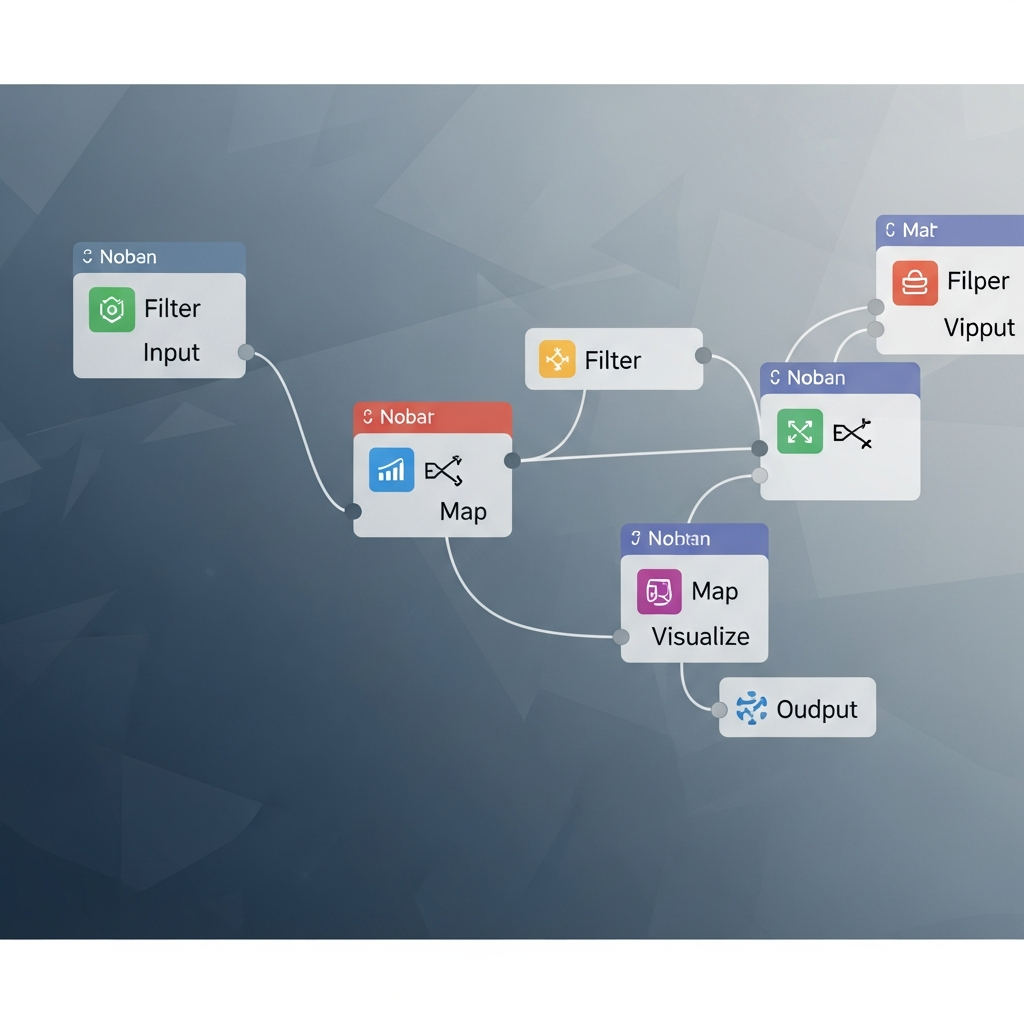
Node-Based Compositing for Data Visualization: A Tutorial
Master node-based compositing for data visualization. Build animated financial charts in Nuke, Natron, or Fusion with this step-by-step tutorial.
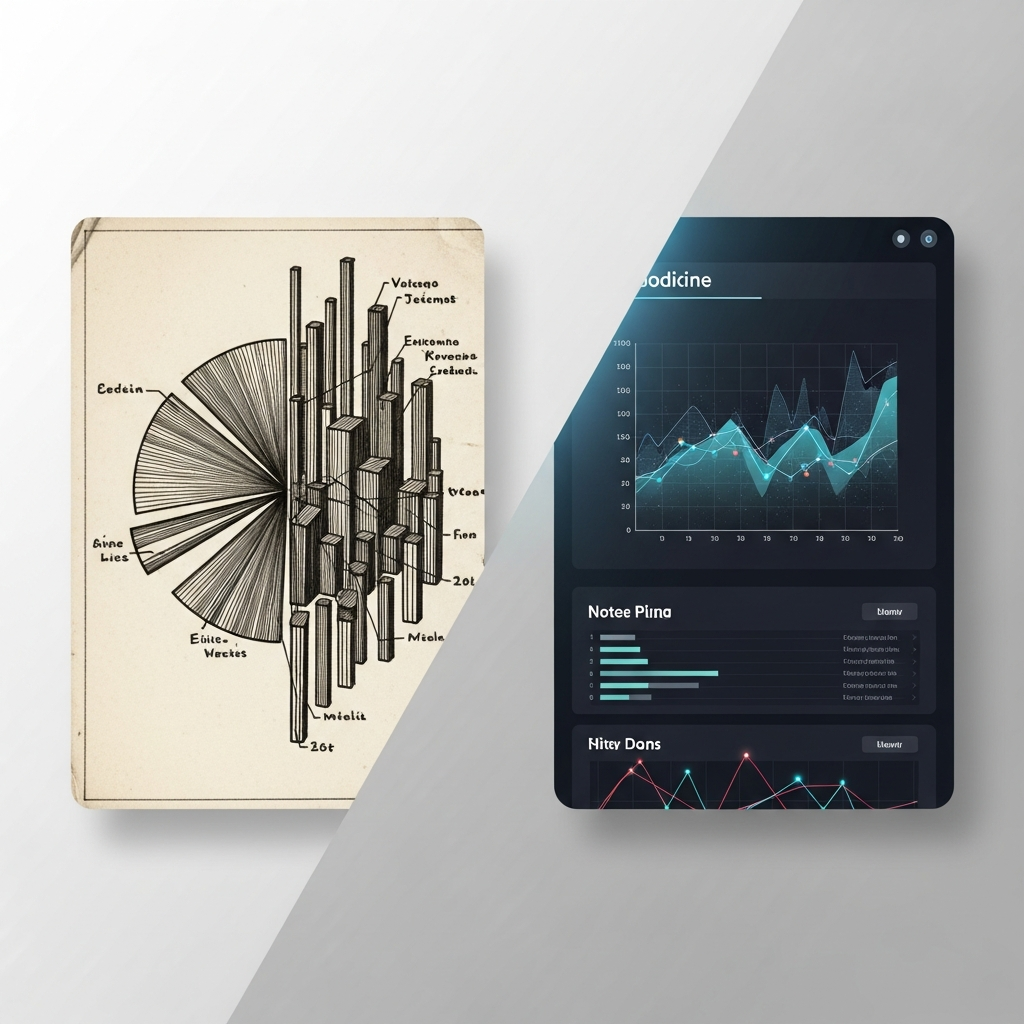
Traditional vs Modern Data Visualization: Which Drives Action?
Compare traditional data analysis techniques with modern visualization methods. Learn which approach drives understanding and action for your specific audience.