
A practical comparison for finance content creators navigating the AI visualization market
Learn when to choose dynamic models over static visuals for your financial content. This guide breaks down engagement metrics, production costs, and platform fit to help you allocate resources effectively.
TL;DR
Dynamic models win for engagement - Video-first platforms algorithmically favor animated content, and viewers retain more information from motion graphics than static charts
Production speed is now comparable - AI-driven animation tools have collapsed the time gap, making dynamic content practical for daily publishing workflows
Static visuals remain valuable for reference - Print materials, regulatory documentation, and contexts requiring quick data extraction still favor static formats
Match format to distribution channel - Use dynamic for YouTube, LinkedIn, and social; use static for email, print, and compliance materials
The market has chosen - With the AI visualization market projected to reach USD 1,797 million by 2032 and 92% of businesses prioritizing generative AI investment, dynamic content infrastructure is where resources flow
The Decision Finance Creators Face Today
Finance content creators stand at a crossroads. The AI visualization market, valued at USD 766 million in 2024, offers two distinct paths: dynamic models that animate data over time, or static visuals that capture a single moment. Each approach carries trade-offs in production time, audience retention, and storytelling depth.
This comparison addresses a specific scenario. You have financial data that needs to reach an audience, whether through social media, client presentations, or editorial content. Your constraints include limited production resources, tight deadlines, and the need for accuracy. The question is not which approach is universally better, but which serves your specific goals.
We will evaluate both approaches across engagement metrics, production efficiency, accuracy requirements, and platform suitability. The goal is to help you allocate resources where they generate the most value.
Quick Verdict
Choose dynamic models if you prioritize audience retention, explain time-series data, or distribute content on video-first platforms like YouTube and LinkedIn. Dynamic models excel at revealing trends and relationships that unfold over time.
Choose static visuals if you need rapid production, work with snapshot data, or publish primarily in print or text-heavy formats. Static visuals remain effective for quick reference and situations where animation adds no informational value.
For most finance content creators targeting digital audiences, dynamic models now deliver superior engagement returns. The production gap has narrowed significantly with AI-driven animation tools.
Criterion | Dynamic Models | Static Visuals | Winner |
|---|---|---|---|
Audience Engagement | Higher retention, shares | Quick scanning | Dynamic |
Production Speed | Minutes with AI tools | Minutes | Tie |
Data Accuracy | Requires validation | Easier to verify | Static (slight) |
Platform Reach | Video-first platforms | Universal | Dynamic |
Storytelling Depth | Sequential narrative | Single insight | Dynamic |
Accessibility | Requires playback | Immediate | Static |
Cost per Asset | Decreasing rapidly | Low and stable | Context-dependent |
Evaluation Criteria: What Actually Matters
Audience Engagement measures whether viewers watch, share, and act on your content. For finance creators, this translates directly to influence and reach. We weight this heavily because engagement determines content ROI.
Production Efficiency accounts for the time from raw data to published visual. Finance news moves fast. A tool that takes hours loses value when markets shift in minutes.
Data Accuracy is non-negotiable in finance. Misrepresented data damages credibility permanently. We evaluate how each approach handles precision, updates, and error correction.
Platform Suitability recognizes that content lives in specific environments. LinkedIn favors video. Print requires static. Your distribution strategy should inform your production approach.
Storytelling Capability assesses how effectively each format communicates cause and effect, trends, and relationships. Financial data often tells a story that unfolds over time.
Scalability considers whether you can produce more content without proportionally increasing resources. This matters as content demands grow.
Head-to-Head: Audience Engagement
Dynamic Models
Motion captures attention. Animated charts showing market movements, earnings trends, or economic indicators hold viewers through the narrative arc. Platforms algorithmically favor video content, amplifying reach.
The limitation is that poorly executed animation distracts rather than clarifies. Motion must serve the data, not showcase technical capability. Gratuitous effects undermine credibility with sophisticated finance audiences.
Static Visuals
Static charts allow immediate comprehension. Viewers scan, extract the key insight, and move on. This efficiency suits audiences seeking quick reference rather than deep understanding.
The limitation is that static visuals struggle to convey change over time. A chart showing stock performance requires the viewer to mentally animate the trend line. This cognitive load reduces impact.
Verdict
Dynamic models win for content designed to educate, persuade, or entertain. Static visuals remain appropriate for reference materials and contexts where viewers need to extract specific data points quickly. 92% of businesses now prioritize generative AI investment, signaling where the market sees engagement value.
Head-to-Head: Production Efficiency
Dynamic Models
Traditional animation required After Effects expertise, hours of timeline editing, and multiple revision cycles. This created a production bottleneck that made dynamic content impractical for most finance creators.
AI-driven animation has collapsed this timeline. Tools now generate motion graphics from data inputs without manual keyframing. What took days now takes minutes. The bottleneck has shifted from production to ideation.
Static Visuals
Static chart creation is mature and fast. Excel, Tableau, and dedicated visualization tools produce publication-ready graphics in minutes. The workflow is familiar to most finance professionals.
The limitation is that "fast" has become table stakes. When dynamic content can be produced at comparable speed, the efficiency advantage of static visuals diminishes.
Verdict
This is now a tie for creators using modern AI tools. The AI market's projected growth to USD 3,497 billion by 2033 reflects massive investment in closing production gaps. Legacy workflows still favor static, but that advantage erodes monthly.
Head-to-Head: Data Accuracy
Dynamic Models
Animation introduces more variables that can misrepresent data. Timing, easing, and scale transitions must accurately reflect underlying values. A bar chart that animates growth too quickly can exaggerate trends.
The strength is that well-designed dynamic models can actually improve accuracy perception by showing exact values at each point in time. Interactive visualization allows viewers to pause and verify.
Static Visuals
Static charts are easier to audit. Every data point is visible simultaneously. Errors are more apparent to both creators and viewers. The format has decades of established conventions for accurate representation.
The limitation is that static formats can also mislead through axis manipulation, cherry-picked timeframes, and visual tricks. The format does not guarantee accuracy, only easier verification.
Verdict
Static visuals hold a slight edge for verification ease. However, the accuracy question depends more on creator intent and tool quality than format choice. Domain-specific visualization tools that understand financial data conventions reduce error risk in both formats.
Head-to-Head: Platform Suitability
Dynamic Models
YouTube, LinkedIn, Twitter/X, and TikTok all prioritize video content in their algorithms. Finance creators on these platforms report higher reach and engagement with animated content. The trend is accelerating.
Email newsletters and traditional media present challenges. Video embeds increase load times and may not autoplay. Some contexts still require static alternatives.
Static Visuals
Static images work everywhere. Print, email, presentations, social media, and web all handle static graphics reliably. Universal compatibility reduces distribution friction.
The limitation is that universal compatibility does not mean optimal performance. A static chart on YouTube competes poorly against animated alternatives. Platform-native formats outperform.
Verdict
Dynamic models win for video-first platforms, which now dominate finance content distribution. Static visuals remain necessary for print and email but should be considered supplementary rather than primary for most creators.
Head-to-Head: Storytelling Capability
Dynamic Models
Financial data tells stories about change. Earnings growth, market corrections, economic cycles, all unfold over time. Animation naturally maps to this temporal dimension. Viewers see cause and effect rather than inferring it.
Scientific visualization principles apply directly. AI-driven animation can reveal patterns that static representations obscure. The human visual system processes motion intuitively.
Static Visuals
Static charts excel at comparison and proportion. Side-by-side layouts, small multiples, and composition charts communicate relationships effectively. Some stories are better told through juxtaposition than sequence.
The limitation is that complex narratives require multiple static visuals, increasing cognitive load. Viewers must mentally connect separate images into a coherent story.
Verdict
Dynamic models win decisively for time-series data and causal narratives. Static visuals remain effective for point-in-time comparisons and reference materials. Match format to story type.
Head-to-Head: Scalability
Dynamic Models
AI automation enables scalable dynamic content production. Template-based systems can generate hundreds of variations from data feeds. This transforms dynamic content from premium to standard.
AI captured nearly 50% of global funding in 2025, with $202.3 billion invested. Much of this targets content automation. The infrastructure for scalable dynamic production is being built rapidly.
Static Visuals
Static visualization has been scalable for years. Automated reporting tools generate thousands of charts from database queries. The workflow is proven and reliable.
The limitation is that scaling static content does not increase engagement proportionally. More charts do not necessarily mean more impact.
Verdict
Dynamic models are approaching parity in scalability while offering superior per-asset engagement. The AI Graph Makers market projection to USD 1,797 million by 2032 reflects this convergence.
Use Case Mapping: When to Choose Each
If you explain quarterly earnings to retail investors, choose dynamic models. Animated revenue and profit charts reveal the story behind the numbers. Viewers understand trajectory, not just endpoints.
If you publish daily market summaries, choose dynamic models with AI automation. Tools like Flowi generate After Effects-quality motion graphics from data inputs, matching the speed requirements of daily publishing.
If you create reference materials for research reports, choose static visuals. Readers need to extract specific values and compare across multiple charts. Animation adds friction here.
If you present to institutional clients, choose dynamic models for the presentation itself, with static exports for leave-behind documents. This combination maximizes both engagement and utility.
If you work in regulatory contexts with strict documentation requirements, choose static visuals. Audit trails and version control are simpler. Animation introduces variables that complicate compliance.
What Both Approaches Get Wrong
Neither dynamic models nor static visuals solve the underlying challenge of data quality. Garbage in, garbage out applies regardless of format. Beautiful animation of flawed data is still misleading.
Both approaches also struggle with accessibility. Dynamic content requires captions and audio descriptions. Static visuals need alt text and color-blind-friendly palettes. The industry underinvests in accessibility across formats.
Finally, both formats assume viewer attention. The real competition is not between dynamic and static, but between your content and everything else demanding your audience's time. Format choice matters less than insight quality.
Migration and Switching Considerations
Switching from static to dynamic requires workflow changes but not necessarily new skills. AI-driven animation tools abstract the technical complexity. The learning curve is measured in hours, not weeks.
Data portability is generally good. Financial data in spreadsheet formats works with both static and dynamic tools. You are not locked into a format by your data infrastructure.
Cost considerations favor experimentation. Many AI visualization tools offer usage-based pricing. You can test dynamic content production without large upfront investment.
When switching makes sense: if your engagement metrics have plateaued, if competitors are gaining ground with video content, or if your audience has migrated to video-first platforms. These signals suggest the switching cost is worth paying.
When to stay with static: if your audience explicitly prefers reference materials, if regulatory requirements constrain format choices, or if your distribution is primarily print. Do not switch for novelty alone.
Final Recommendation
For finance content creators targeting digital audiences in 2025, dynamic models deliver superior engagement returns. The production efficiency gap has closed. The engagement gap has not.
This does not mean abandoning static visuals entirely. They remain valuable for reference materials, print distribution, and contexts where viewers need to extract specific data points. The optimal strategy uses both formats strategically.
Start with your distribution channels. If video-first platforms dominate your reach, prioritize dynamic content. Use AI-driven animation tools to match static production speeds. Reserve static visuals for supplementary materials and specific use cases.
The AI software market's trajectory to $467 billion by 2030 signals where investment and innovation concentrate. Position your content strategy accordingly. The tools to automate, visualize, and animate financial data at scale exist today. The question is whether you use them before your competitors do.
Frequently Asked Questions
What is AI animation in data visualization?
AI animation in data visualization uses machine learning to automatically generate motion graphics from data inputs. Instead of manually keyframing each element in software like After Effects, AI tools interpret data relationships and create appropriate animations. This includes chart transitions, trend line movements, and comparative visualizations that would traditionally require hours of manual work.
How does AI-driven animation maintain scientific accuracy in financial charts?
Quality AI visualization tools enforce data-accurate animations by tying visual properties directly to underlying values. Bar heights, line positions, and timing all derive from the source data rather than aesthetic choices. Domain-specific tools designed for finance understand conventions like proper axis scaling and avoid common misleading practices. However, creators must still validate outputs against source data.
When should finance creators use dynamic models versus static visuals?
Use dynamic models when explaining trends over time, presenting on video platforms, or telling causal narratives about financial performance. Use static visuals for reference materials, print distribution, regulatory documentation, and contexts where viewers need to extract specific numerical values quickly. Many creators use both strategically based on distribution channel and content purpose.
What production time difference exists between dynamic and static financial visuals?
With traditional tools, dynamic content took 10 to 50 times longer than static equivalents. AI-driven animation has reduced this gap dramatically. Modern tools can generate motion graphics in minutes, approaching parity with static chart creation. The remaining time difference is often negligible compared to the engagement benefits dynamic content provides.
Which platforms favor dynamic financial content?
YouTube, LinkedIn, Twitter/X, and TikTok all algorithmically prioritize video content, including animated data visualizations. These platforms show higher reach and engagement metrics for dynamic content compared to static images. Email newsletters and print publications still favor static visuals due to technical constraints and reader expectations.
How do AI visualization tools handle real-time financial data?
Advanced AI graph makers connect to data feeds and generate visualizations as data updates. This enables real-time analytics dashboards and automated content production for daily market summaries. The technology supports both batch processing of historical data and streaming updates for live market coverage.
Sources
https://www.intelmarketresearch.com/ai-graph-makers-market-6573
https://digitalmarketinginstitute.com/blog/10-eye-opening-ai-marketing-stats-in-2025
https://www.grandviewresearch.com/industry-analysis/artificial-intelligence-ai-market
https://www.marketsandmarkets.com/Market-Reports/artificial-intelligence-market-74851580.html
https://news.crunchbase.com/ai/big-funding-trends-charts-eoy-2025/
Read Next
Continue Exploring

Visual Communication Tools for Finance Creators
Learn how to integrate visual communication tools with engagement metrics. A practical framework for finance creators building sustainable audience growth.

5 Reasons Scientific Accuracy Defines AI Visualization Success
Discover why scientific accuracy in AI visualization tools matters for finance creators. Five essential reasons to prioritize precision in your dynamic models.
5 Signs Your Interactive Charts Are Failing to Engage
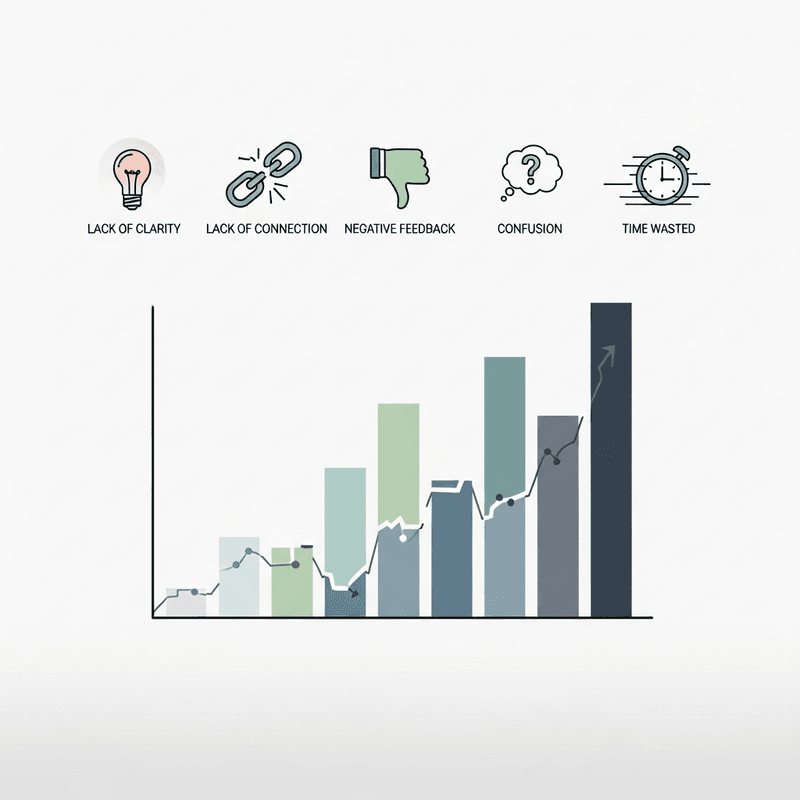
Discover 5 key indicators that your interactive charts aren't engaging audiences. Learn which engagement metrics reveal real problems versus vanity numbers.